
Misinformation in the Digital Age

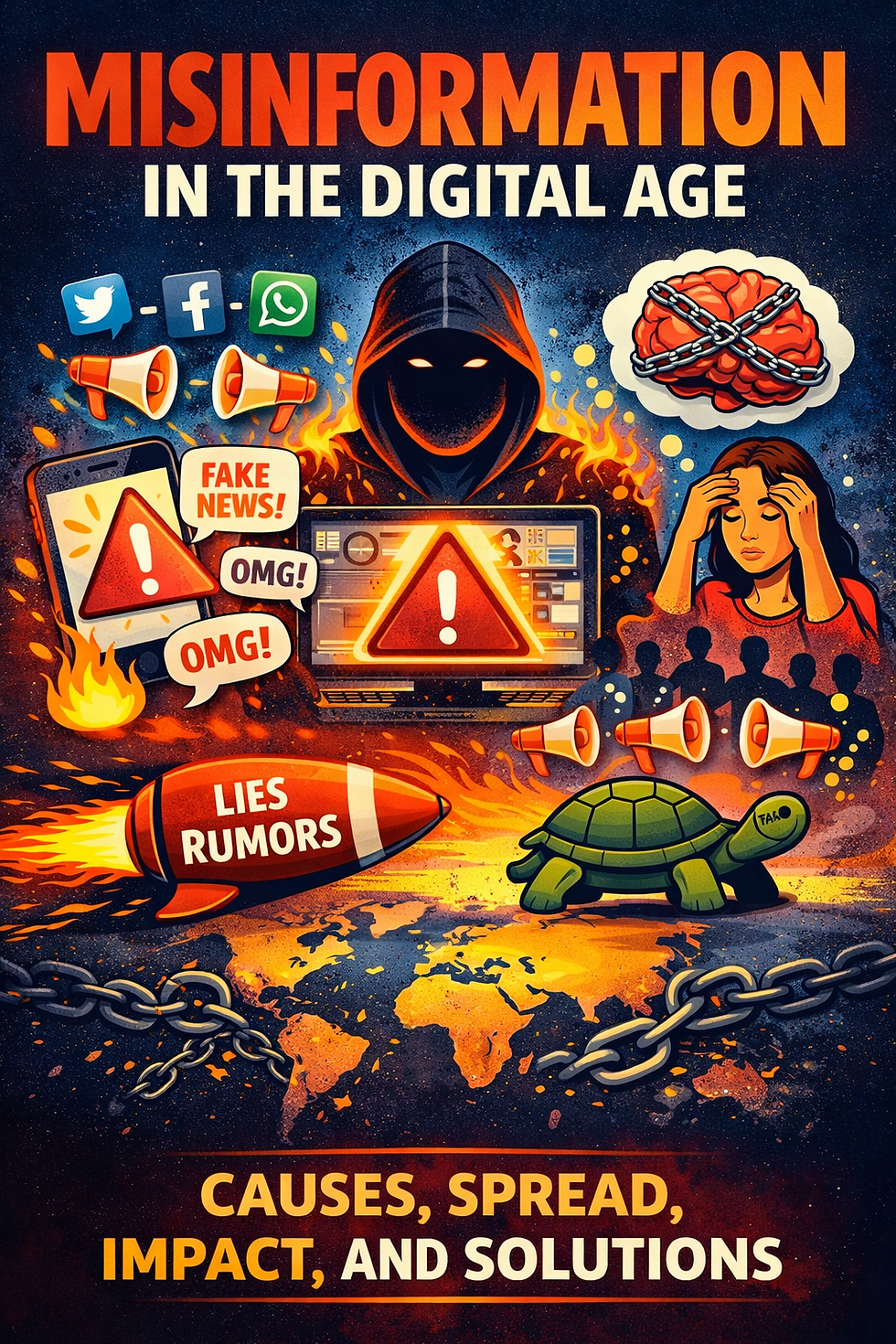
In an era where digital technologies power communication, learning, and development, misinformation has emerged as a significant challenge. For platforms like Tech4D Impact, which leverage technology for social good, understanding misinformation is essential to ensuring that digital transformation leads to informed and empowered communities rather than confusion and harm. According to the World Health Organization, the rapid spread of false information—termed an “infodemic”—can be as dangerous as the issues it misrepresents.
Causes and Underlying Reasons
Misinformation stems from both human and systemic factors. On the human side, limited digital literacy, confirmation bias, and emotional decision-making often lead individuals to accept and share inaccurate information. As highlighted by UNESCO, people tend to trust and disseminate information that aligns with their existing beliefs, even when it lacks evidence.
On the systemic side, the design of digital platforms plays a key role. Social media algorithms prioritize engagement—likes, shares, and comments—over accuracy. Research from the MIT Sloan School of Management shows that false information often spreads faster than true stories because it is more novel and emotionally engaging. Additionally, some misinformation is deliberately created for political influence, financial gain, or social manipulation.
How Misinformation Spreads
Misinformation spreads rapidly through interconnected digital channels such as social media platforms, messaging apps, and online forums. A single post can reach thousands within minutes through resharing. Findings from the Pew Research Center indicate that social media has become a primary news source for many, increasing the speed at which unverified information circulates.
Closed networks, such as group chats, often accelerate this spread because information shared within trusted circles is less likely to be questioned. Visual content—images, videos, and infographics—further increases virality, as it is easier to consume and more persuasive than text.
Effects on Society and Development
The impact of misinformation is both immediate and long-term. It erodes trust in institutions, experts, and credible media sources. The OECD notes that misinformation can weaken democratic processes and public trust.
In critical sectors like health, agriculture, and education, misinformation can lead to harmful decisions, reduced adoption of beneficial technologies, and setbacks in development outcomes. It also contributes to social polarization by reinforcing extreme viewpoints and creating divisions within communities—particularly in regions where access to verified information is limited.
Prevention and Control Strategies
Addressing misinformation requires a multi-stakeholder approach:
Promoting Digital Literacy: Educating users to critically evaluate information sources is essential, as emphasized by UNESCO.
Strengthening Fact-Checking Mechanisms: Supporting independent verification systems can help curb false narratives, aligning with recommendations from the World Health Organization.
Responsible Platform Design: Technology companies should refine algorithms to prioritize credible content over sensational material, a concern also raised by the MIT Sloan School of Management.
Community Engagement: Awareness campaigns can foster responsible sharing habits and accountability at the grassroots level.
Policy and Governance: Governments and institutions can implement balanced regulations to discourage deliberate misinformation, as supported by the OECD.
Misinformation is not merely a byproduct of the digital age—it is a challenge that must be actively managed to ensure technology serves as a force for good. For Tech4D Impact, the focus should extend beyond access to digital tools to fostering an information ecosystem grounded in trust, accuracy, and accountability. Empowering individuals with the skills and systems to navigate information responsibly is key to achieving sustainable development in a connected world.


Comments